ServicesEnergy Efficient Windows
Energy Efficient Windows in La Mirada
If summer afternoons turn some rooms into ovens, or the AC runs nonstop to keep up, your windows may be the weak spot. We replace old single-pane and leaky frames with dual-pane, low-E windows sized to your openings, and we explain every option in plain terms first.
What makes a window energy efficient
Good thermal windows handle heat in two ways. They block much of the sun's warmth from coming through the glass, and they keep the air your AC or furnace paid for from leaking out at the edges. The parts that do this are dual-pane glass with a low-E coating, an insulating gas between the panes, and a vinyl or fiberglass frame that won't conduct heat like old aluminum.
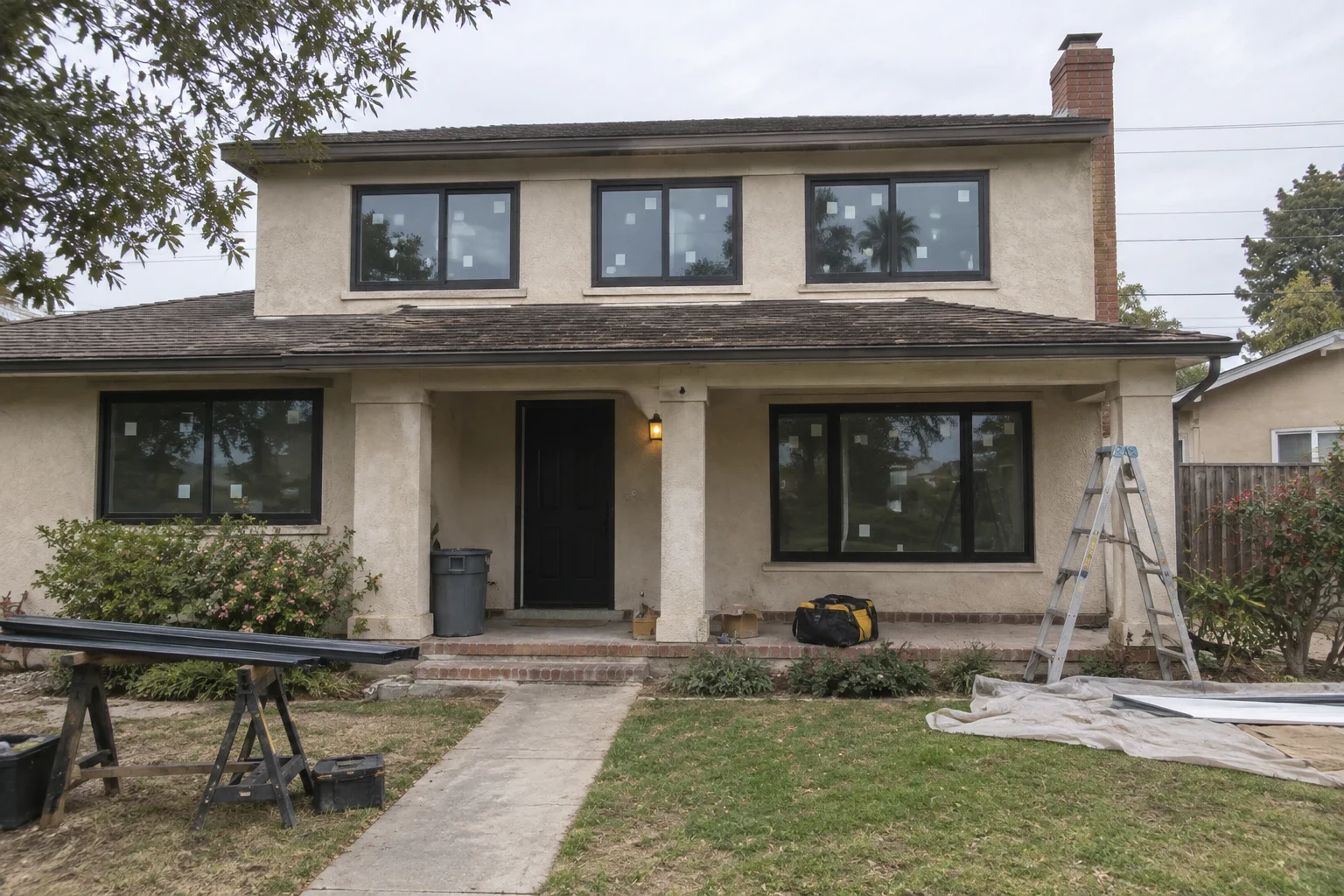
Plenty of homes around La Mirada still have the aluminum sliders they were built with. Those frames heat up in the afternoon sun and collect condensation on cool mornings. Replacing them with efficient units is often the most noticeable comfort upgrade a homeowner can make in one project.
Every new unit carries a sticker from the National Fenestration Rating Council with two key numbers: how well the window holds in heat, and how much of the sun's heat it lets through. We walk you through both so you can compare bids on equal terms, and we pick the glass wall by wall instead of putting one package in every opening.
What the work includes
- Glass matched to sun exposure
- Windows on the west and south sides take the strongest afternoon sun, so we recommend low-E coatings with a lower solar heat gain rating there. Walls that stay shaded can use glass that lets in more daylight.
- Measured, made-to-fit units
- We take the measurements for every opening ourselves. A close fit needs less filler around the edges and keeps its seal for years.
- Careful removal and sealing
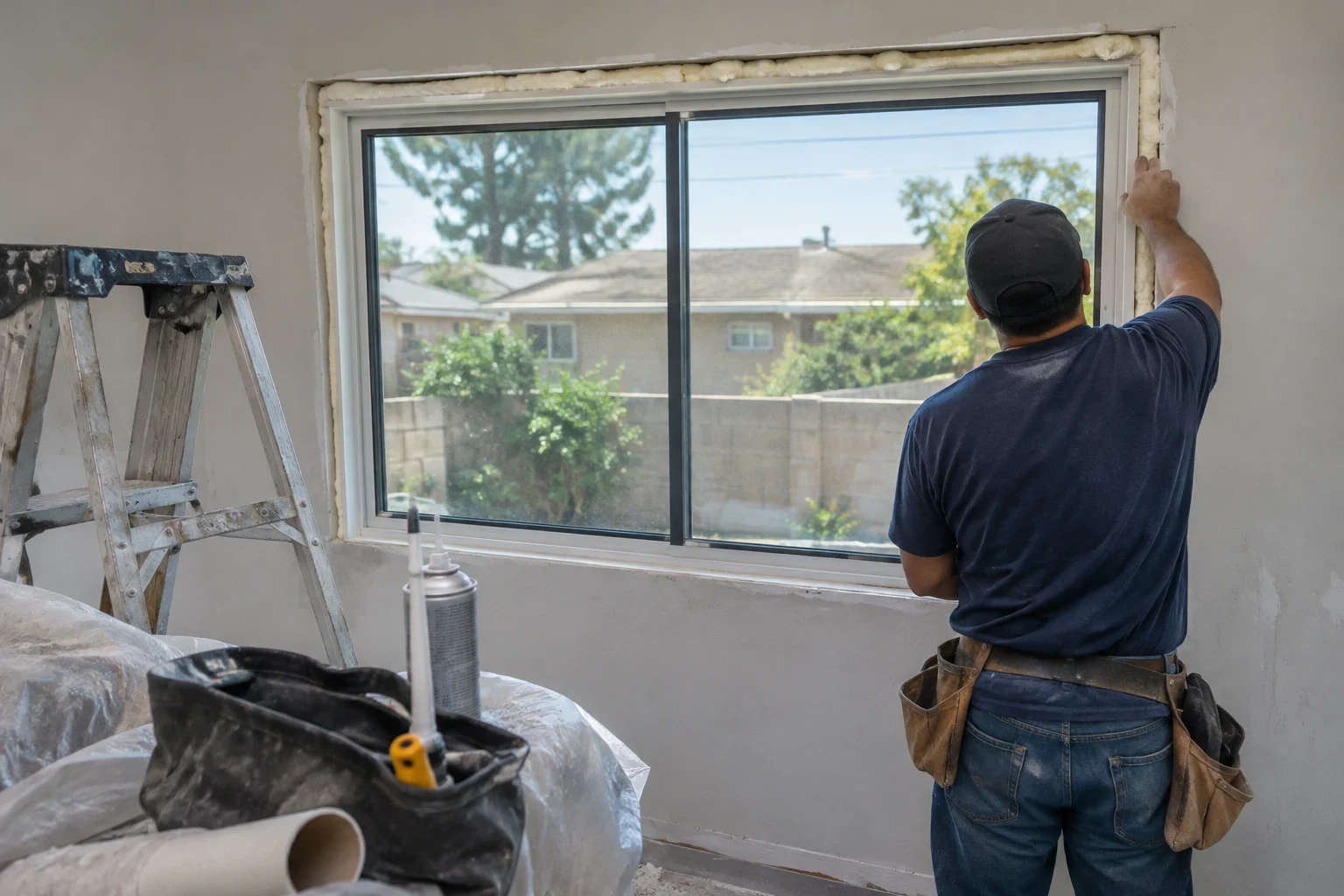
- We pull the old unit, clean the opening and check it for rot or damage. The new window goes in level, shimmed, insulated and sealed on both sides, with flashing and sealant chosen for stucco or wood siding.
- Products that meet state energy rules
- California's Title 24 energy standards set minimum performance levels for replacement windows. The units we order meet them, and we pull the permit when your project calls for one.
- Cleanup and a walkthrough
- Old frames and glass leave with us, and we vacuum each room we worked in. Before we go, we demonstrate the latches, the sashes and how to tip them inward so the outside glass is easy to wash.
Signs your windows are costing you comfort
Hot rooms every afternoon
When one side of the house always runs warmer, the glass is probably letting solar heat pour in. Heavy drapes help some, but they also cost you light and the view.
Fog between the panes
Haze or droplets sealed inside the glass tell you the unit's edge seal has broken and the gas fill has escaped. Wiping won't clear it, and that window has lost much of its insulating value.
Single-pane aluminum frames
These were the norm decades ago. They let heat through in both directions, and their weatherstripping is usually worn enough to let in dust and street noise.
Drafts you can feel
On a breezy day, hold your hand near the frame. If you feel air moving, your heating and cooling are working to cover for those gaps.
Faded floors and fabrics
UV light through plain glass slowly bleaches rugs, wood floors and furniture. Low-E coatings filter out a large share of it.
How your window project runs
- 1
Free in-home estimate
We look at each window, measure it and ask which rooms give you the most trouble. You receive a written estimate that lists every window and the glass we suggest for it. There's no pressure to sign, and you're free to take your time.
- 2
Ordering and scheduling
When you're ready, we order windows built to your measurements and pick an install date that works for you. We'll tell you which rooms we need to reach so you can clear space beforehand.
- 3
Install day
Drop cloths go down first, and we change out one window at a time so your home never sits open. Depending on how many windows you have, most jobs take a day or two.
- 4
Final check together
We open and close every sash, try each lock, and look over the seals inside and out. After cleanup, we go over simple care tips with you.
What moves the price
Efficient windows cost more than basic builder-grade glass. How much more depends on the products you pick and on what we find once the old units come out. Your estimate gives every window its own line, so you can see exactly what each opening costs and why.
- Window count and size
- The total rises with every opening on the list, since each one adds material and time on site. Oversized picture windows and unusual shapes also take longer to build and need extra hands to set.
- The glass you choose
- Dual-pane low-E glass is what most homeowners pick for comfort. Triple-pane units, laminated glass for street noise, or special coatings raise the cost.
- Frame material
- Vinyl is the most common efficient frame. Fiberglass costs more, but it stays stable through long stretches of hot weather.
- Retrofit versus full-frame
- With a retrofit, the new unit fits inside the frame you already have, so the stucco around it stays as it is. A full-frame job removes the old frame entirely, costs more, and makes sense when that frame is damaged. Our Window Retrofitting page goes into both methods.
- Hidden problems in the opening
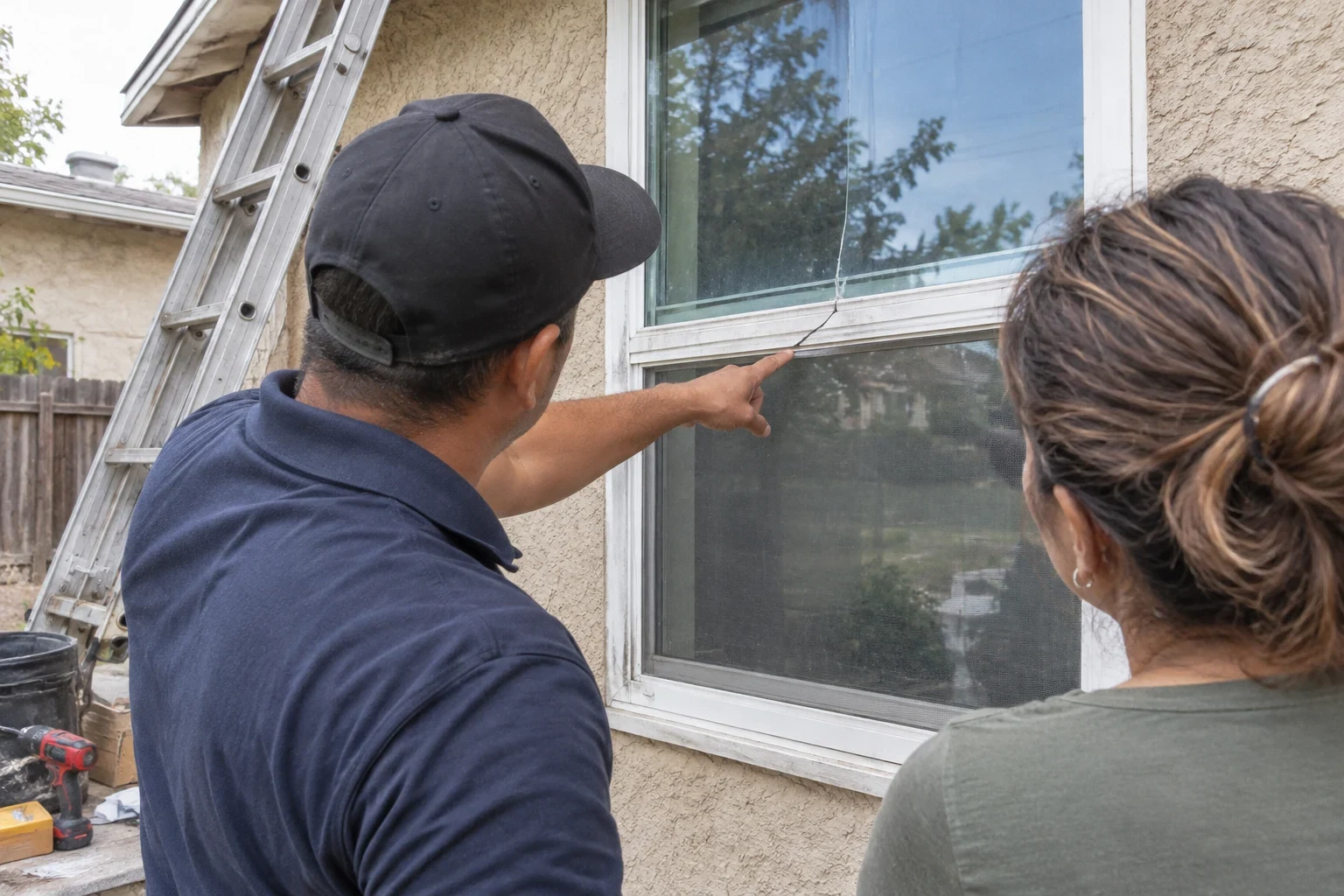
- Rotted wood, water damage or a crooked opening must be corrected before a new window can seal tight. If we find any of that, we take photos, show you, and talk it over before any added work begins.
Questions about energy efficient windows
Something not covered here? (562) 564-6374
Will new windows lower my energy bill?
In most homes they help, and the change is biggest when single-pane aluminum is coming out. The amount depends on your insulation, your AC system and how many windows face the sun. We won't give you a savings number we can't stand behind, but we will walk you through each window's performance ratings.
A storm or accident broke one of my windows. Will insurance pay for an efficient upgrade?
Most policies pay to replace damaged items with something of like kind and quality, not to upgrade them. We can photograph the damage, write an estimate that lists the like-for-like cost apart from any upgrade, and explain how these claims tend to go. The coverage decision belongs to your adjuster, and we say so up front.
What exactly is low-E glass?
Low-E means low emissivity. It is an extremely thin metallic layer on the glass that bounces heat back while still letting daylight in. Most products show no visible tint, yet on a hot afternoon you can feel less warmth when you stand beside the window.
Do I have to do every window at once?
No. Many homeowners start with the hottest rooms or the windows in the roughest shape and come back for the rest when the budget allows. We record the styles and glass used in the first phase, so the windows added later look and perform the same.
How is this different from regular window replacement?
The install itself is very similar. What changes is the goal: on this work we choose coatings, gas fill and frames for how they handle heat, one wall at a time. If you mainly want to swap out worn units, our Window Replacement page covers that.
Find out what efficient windows would change in your home
We'll look at your windows, point out where heat is getting in, and give you a written estimate with no pressure to decide on the spot.